
Bealtaine - Celebrating the Turning of the Celtic Calendar and the Festival of Uisneach
Written by Sophie Gavin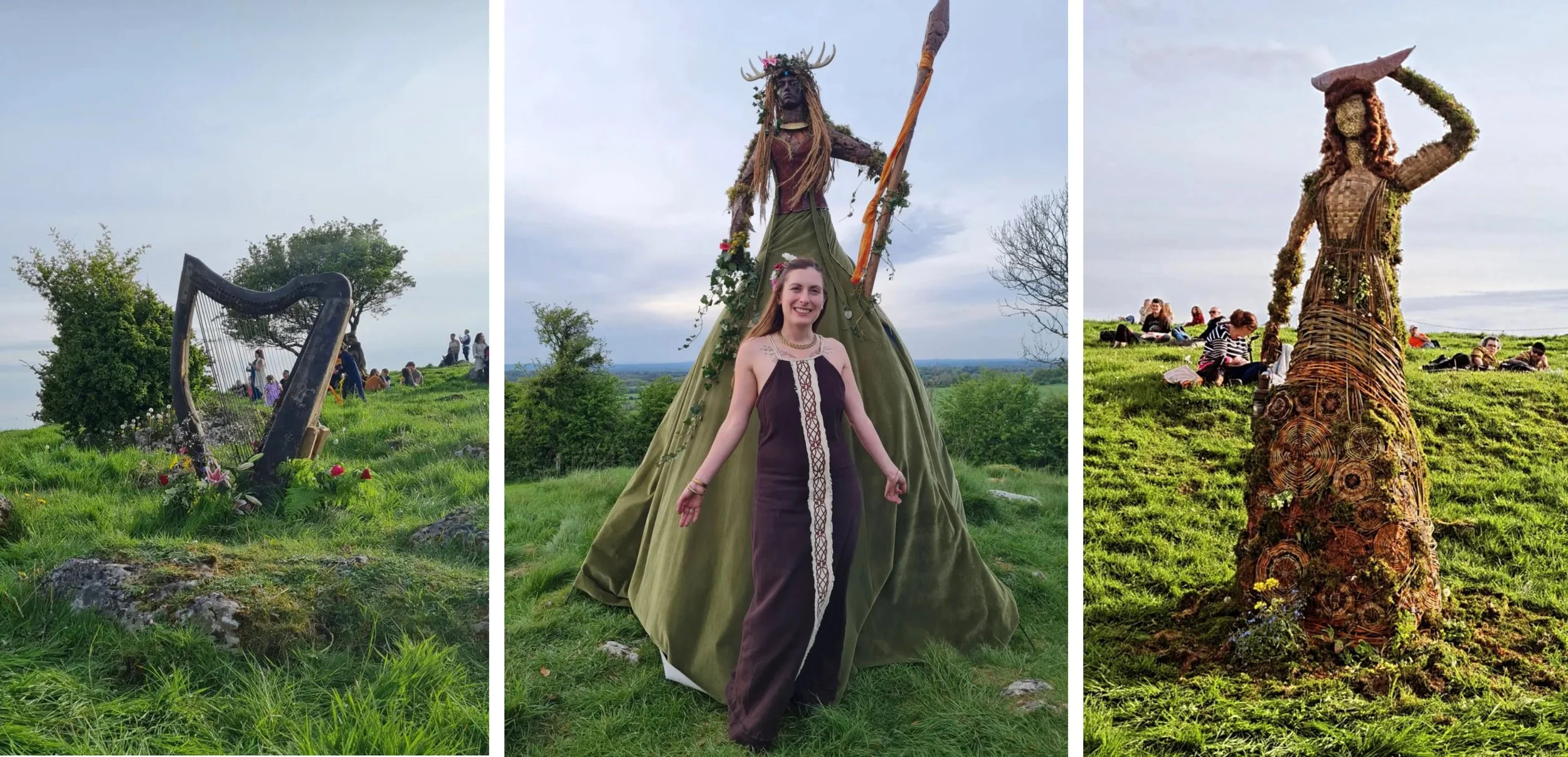
Celebrating Bealtaine at the Hill of Uisneach in the heart of Ireland, County Westmeath.
Regina is wearing the Dark Knotwork Celtic Dress. Explore more Celtic dresses.
Bealtaine: Fire, Summer, and the Bright Half of the Year
Bealtaine, also known as Beltane, Beltain, Beltainne, Beltaine, or Beltany, is a traditional Gaelic festival that celebrates a turning point in the Celtic calendar.
It marks the beginning of summer in the northern hemisphere, as we move from the darker half of the year into the bright half. The festival is celebrated on May 1st through to its astrological date of May 5th, with festivities often beginning on the evening of April 30th, known as May Eve.

The Mouth of Fire
Bealtaine is also the Irish name for the month of May, and it has one of the oldest written records of the word in its many forms. The word is often understood as being composed of two parts: “béal”, meaning mouth, and “tine”, meaning fire, creating the evocative phrase “mouth of fire”.
Bealtaine is also thought to be connected with the god Bel or Belenus, from the Celtic root bel, meaning bright or shining.
Agricultural Origins
Several of Ireland’s Celtic festivals have agricultural origins, including Bealtaine. Traditionally, Bealtaine marked the time of year when farmers would lead their livestock to higher elevations for the summer in search of more fertile grazing land.
This practice freed up the land at home for crop cultivation, while farmers stayed in temporary huts on the hillsides. When the season changed in October, they would return home before Samhain.
Fire, Protection, and Renewal
Bealtaine has its roots in pre-Christian Celtic mythology. During this time, the Celts believed the veil between the physical world and the spiritual world was thin.
To protect themselves and their livestock from malevolent spirits, piseogs, and fairies, people performed rituals and lit bonfires. Fire was used for purification, fertility, protection, and good luck for crops and livestock. Jumping over the bonfire was believed to enhance the purification process, while ashes from the fire were thought to have healing and protective properties.

Regina, designer at Celtic Fusion, is a skilled fire dancer.
Ladies wearing the Wicca Dress and Dark Knotwork Dress. Explore more Celtic dresses.
Celebrations at Uisneach
The lighting of the Bealtaine Fire on the Hill of Uisneach in modern-day County Westmeath is one of Ireland’s oldest and most cherished traditions.
This special time of year was marked by feasting, drinking, dancing, and community, making it an opportunity to connect with people from neighbouring villages.
Prior to the lighting of the main bonfire at sunset on May Eve by the High King of Ireland, smaller fires on the hill would be extinguished. The bonfires from different townlands would then be connected in a network, ultimately linking back to the main bonfire at the “navel” of Ireland: the Hill of Uisneach.

Celebrations at the Hill of Uisneach, lighting the bonfire at sunset on May Eve.
Today, this tradition continues to be celebrated each year at the Hill of Uisneach, honouring Irish heritage at the heart of Ireland. The Bealtaine celebrations have been revived as one of the key events in the Irish cultural calendar, bringing families and communities together.
Maypole and May Queen
In addition to the bonfire, Bealtaine is also associated with the Maypole dance. The Maypole is a tall pole decorated with ribbons and flowers, placed at the centre of a village or town.
People dance around the Maypole, weaving the ribbons together to create a beautiful pattern. The dance symbolises fertility, renewal, and the bright life of spring.
Another traditional aspect of Bealtaine is the crowning of the May Queen. The May Queen is usually chosen by the community to represent the goddess of spring and fertility. She is crowned with flowers and leads the Maypole dance and other festivities.

Lira Karina wearing Celtic Fusion bridal. Explore more wedding dresses.
Celebrating Bealtaine Today
In modern times, Bealtaine is still celebrated in many parts of the world. While some traditional rituals have been adapted or replaced by newer traditions, the essence of the festival remains the same: to celebrate the arrival of spring, the beginning of summer, and the renewal of life.
You can celebrate Bealtaine by lighting a bonfire, dancing around a Maypole, spending time in nature, or simply appreciating the beauty of spring and the power of renewal.

Regina in the bluebells wearing the Light Druid Cardigan. Explore more cardigans, coats and capes.
The Spirit of Bealtaine
Bealtaine is a beautiful and meaningful festival that celebrates summer, renewal, fertility, community, fire, and the living beauty of the land.
Explore Celtic Fusion Designs```